 Dexter Priete
If you are a mountaineer in the Philippines, your ultimate dreams are inevitably shaped by the skyline of the south. Mindanao is home to the highest mountains in the Philippines, establishing itself as the true heavyweight champion of local mountaineering. The island’s unique tectonic geography features stunning peaks, massive volcanic structures, and sprawling ranges that challenge even the most seasoned tuhod-tested climbers.
From the sacred, boulder-strewn slopes of Davao to the mystical mossy forests of Bukidnon, tracking these colossal peaks is the ultimate test of endurance. Through our field logs at Manakaay ug Bukid, we have mapped out the definitive leaderboard of the absolute tallest peaks in Mindanao to help you prepare for your next big expedition.
The Top 3 Peaks at a Glance
If you are looking for a quick summary of the highest points in Mindanao, here are the top three undisputed giants:
- Mount Apo (2,954m): Located between Davao and Cotabato; the highest peak in the Philippines.
- Mount Dulang-Dulang (2,941m): Located in Bukidnon; the 2nd highest peak in the Philippines.
- Mount Kitanglad (2,899m): Located in Bukidnon; the 4th highest peak in the Philippines.
🏔️ The Mindanao Top 10 Peak Leaderboard
| Rank | Mountain | Elevation (Meters / Feet) | Location | Primary Range / Key Feature |
| 1 | Mount Apo | 2,954 m / 9,692 ft | Davao & Cotabato | Highest point in the Philippines |
| 2 | Mount Dulang-Dulang | 2,941 m / 9,649 ft | Bukidnon | Famous mossy “elfin” forest |
| 3 | Mount Kitanglad | 2,899 m / 9,511 ft | Bukidnon | Protected ASEAN Heritage Park |
| 4 | Mount Kalatungan | 2,860 m / 9,383 ft | Bukidnon | 5th highest mountain in the country |
| 5 | Mount Ragang | 2,815 m / 9,236 ft | Lanao del Sur | Active stratovolcano / “Blue Mountain” |
| 6 | Mount Maagnaw | 2,742 m / 8,996 ft | Bukidnon | Challenging target for elite climbers |
| 7 | Mount Pandadagsaan | 2,670 m / 8,760 ft | New Bataan, Davao de Oro | Highest peak in Davao Region / White Peak |
| 8 | Mount Lumuluyaw | 2,612 m / 8,569 ft | Bukidnon | Pristine, protected ancestral wilderness |
| 9 | Mount Mangabon | 2,510 m / 8,234 ft | Misamis Oriental | Humid, jungle-choked ascents |
| 10 | Mount Balatucan | 2,450 m / 8,038 ft | Gingoog, Misamis Oriental | Extensive dormant stratovolcano network |
🌋 Deep-Dive Profiles & Cultural Protocols of the 10 Giants

1. Mount Apo (2,954 meters / 9,692 feet)
Straddling the borders of Davao and Cotabato, Mount Apo is the undisputed king of Philippine peaks. Affectionately revered as the “Grandfather of Philippine Mountains,” this massive, potentially active stratovolcano is the highest point in the entire Philippine archipelago. Climbing Apo is a rite of passage, famous for its giant sulfur-belching vents, vast fields of volcanic boulders, and a breathtaking summit crater lake (Lake Venado) looking out over the region.
- Cultural & Permit Protocol: The massif is considered highly sacred by the indigenous Bagobo, Manobo, and Kalagan Lumad groups. The ancestral guardian spirit, Apo Sandawa, oversees the mountain. Hikers must secure PAMB permits through local LGU tourism units and participate in a traditional Pamaas ritual led by tribal elders to ask permission and protection from the nature spirits before stepping onto the trails.
2. Mount Dulang-Dulang (2,941 meters / 9,649 feet)
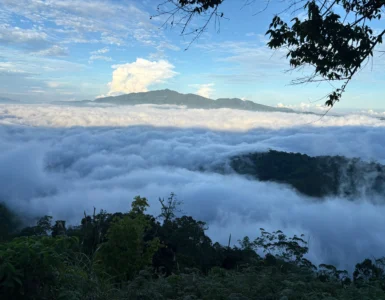
Situated deep within the Kitanglad Range of Bukidnon, “D2” is the second-highest mountain in the Philippines. For many seasoned hikers, it holds a mystical reputation. Mount Dulang-Dulang is world-famous for its sacred, old-growth mossy forest—often referred to as an “elfin forest”. Walking through its summit trail feels like stepping into another world, surrounded by twisted, ancient tree roots, hanging lichens, and a thick, quiet fog.
- Cultural & Permit Protocol: This peak falls strictly under the ancestral domains of the Talaandig tribe of Lantapan. Out of deep respect for tribal law, climbers must coordinate with the local Datu and fund a ritual sacrifice of chickens. Upon reaching the absolute summit, hikers are traditionally expected to perform a silent ritual of tying or hanging bands of white cloth on the branches as an offering of peace.
3. Mount Kitanglad (2,899 meters / 9,511 feet)
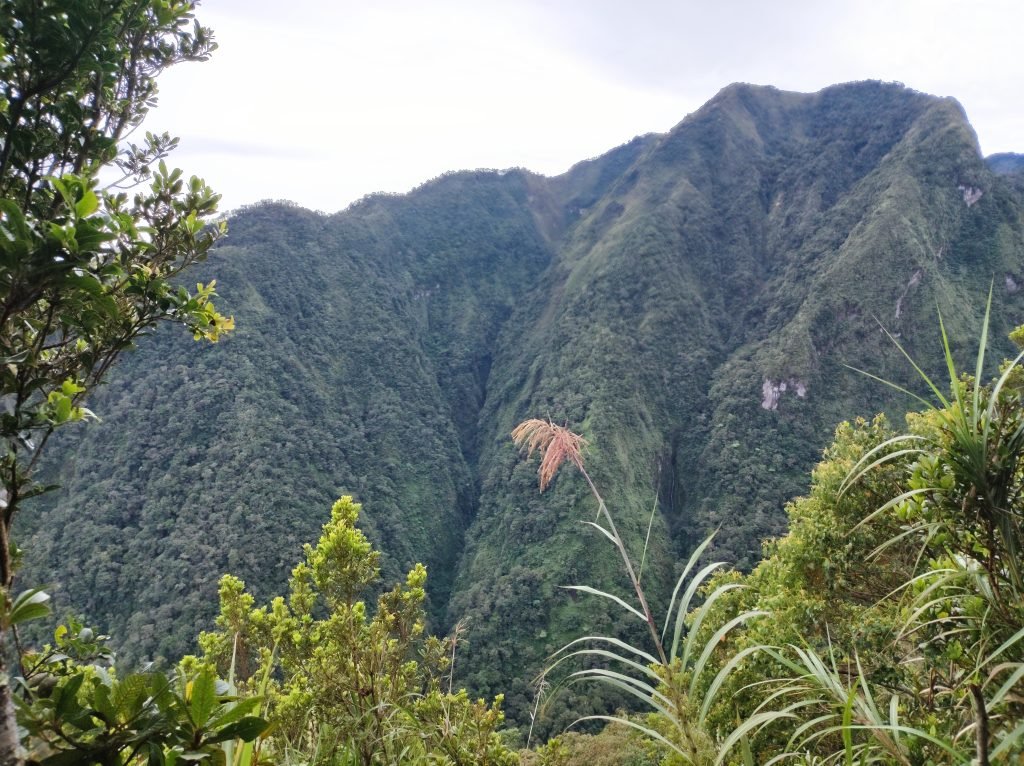
Also dominating the landscape of Bukidnon, Mount Kitanglad stands tall as the fourth-highest mountain in the country. This mountain serves a crucial dual purpose: it is a strictly protected ASEAN Heritage Natural Park rich in endemic biodiversity (including the rare Philippine Eagle), and it simultaneously serves as a major broadcasting tower site for the region. The trail features vertical steel ladders and raw ridges, offering sweeping panoramic views.
- Cultural & Permit Protocol: Managed under a co-protection agreement between DENR and the indigenous communities (Talaandig, Higaonon, and Bukidnon tribes), climbing requires official DENR clearance from Malaybalay City. Like its sister peak D2, a customary tribal monetary or livestock contribution for a cleansing ritual at the jump-off (Sitio Intavas) is standard practice.
4. Mount Kalatungan (2,860 meters / 9,383 feet)
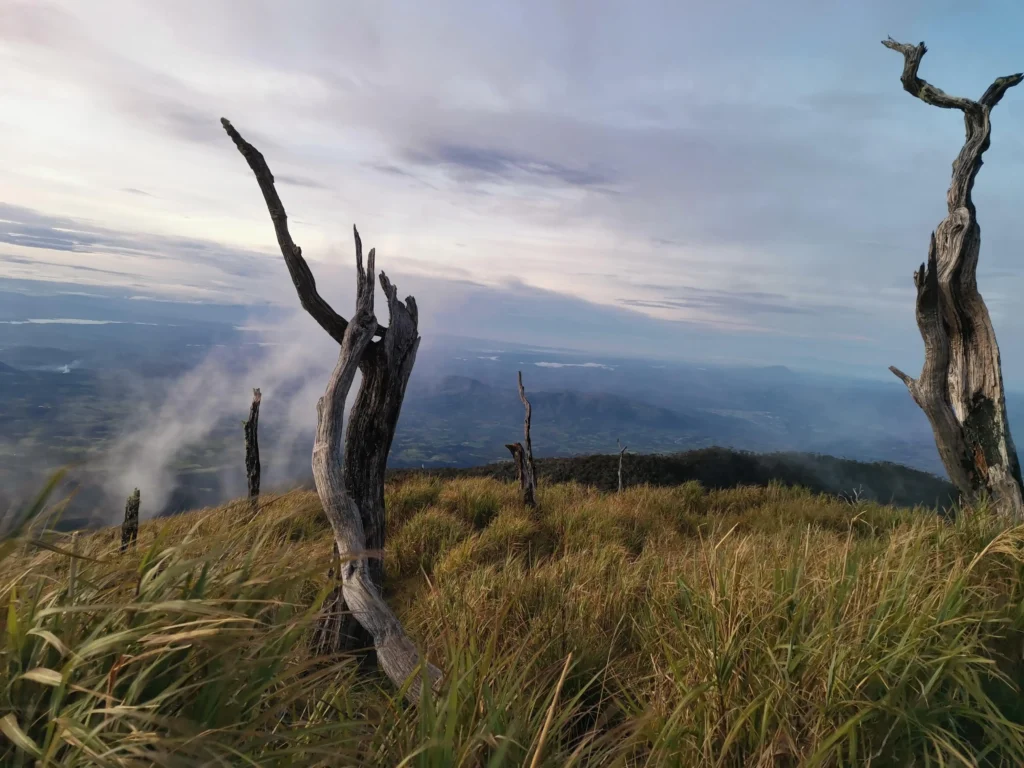
Another beautiful and challenging giant located in Bukidnon, Mount Kalatungan makes up a significant part of the province’s central highland ranges. Ranked as the fifth-highest peak in the Philippines, it is a formidable volcano known for its technical trails, steep ascents, and dense forest covers. It is highly regarded as one of the best conditioning climbs before attempting major multi-day traverses.
- Cultural & Permit Protocol: Known natively as Keretungan, the mountain was formally declared an Indigenous and Community Conserved Area (ICCA). Regarded as an Idsesenggilaha (Sacred Forest), anyone wishing to climb must obtain strict permission from the Ebmegurangen (Council of Elders). Hikers must join the traditional Gulugundu ceremonial protocol and poultry offering performed by Talaandig and Manobo elders at Barangay Mendis, Pangantucan, before entering the forest.
5. Mount Ragang (2,815 meters / 9,236 feet)
Located in Lanao del Sur, this active stratovolcano is the seventh-highest peak in the Philippines. Mount Ragang is deeply evocative, often called the “Blue Mountain” by locals due to the distinct haze that colors its silhouette from a distance. As the most isolated mountain on this list, it presents an extraordinary volcanic terrain that offers lucky climbers sweeping, rare views of the majestic Lake Lanao.
- Cultural & Permit Protocol: Situated within the sovereign ancestral territories of the Maranao people, access to Mt. Ragang requires intense coordination with local municipal executives, security units, and traditional Moro sultanates or tribal chieftains. Visitors must prioritize absolute cultural sensitivity regarding Islamic customs and regional protocols. As of date, climbing the mountain is prohibited.
6. Mount Maagnaw (2,742 meters / 8,996 feet)
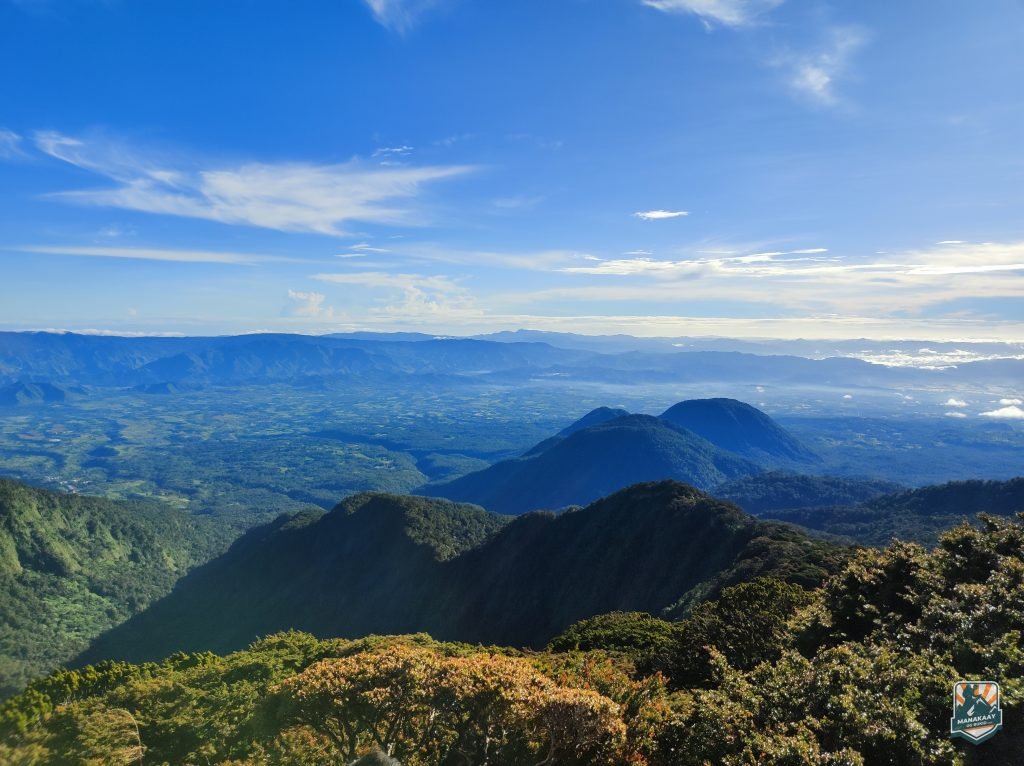
As the third-highest peak within the Kitanglad Range, Mount Maagnaw is a remote and rugged giant. This mountain is frequently tackled by elite mountaineers as part of the intense KD2LM Traverse (Kitanglad, Dulang-Dulang, Maagnaw). The trail is heavily forested, isolated, and opens up to an incredible view of its sister peaks cutting directly into the clouds.
- Cultural & Permit Protocol: Because the trail cuts directly through sacred hunter-gatherer zones of the Talaandig domains, your climb must be cleared during the multi-mountain permit application in Lantapan. Chieftains restrict group numbers tightly here to prevent environmental degradation and protect ancestral burial locations.
7. Mount Pandadagsaan / White Peak (2,670 meters / 8,760 feet)
Tucked away in New Bataan, Davao de Oro, Mount Pandadagsaan (historically known as White Peak or Mt. Tagubud) is the highest point in the Davao Region. It is legendary for its pristine, untouched mossy forests and unique, white limestone trail features.
- Cultural & Permit Protocol: Guarded by the Mansaka and Mandaya tribes, this peak is an essential ancestral watershed.
💡 Trail Connection: As noted in our recent Mt. Pinan-panan trail guide, you can catch a stunning view of White Peak’s massive silhouette towering directly behind the open ridge campsite of Pinan-panan.
8. Mount Lumuluyaw (2,612 meters / 8,569 feet)
Another high-altitude heavyweight belonging to the sprawling Kitanglad Mountain Range in Bukidnon, Mount Lumuluyaw is a lesser-explored backcountry gem. It remains heavily protected under ancestral domains, preserving dense tropical wilderness, hidden stream systems, and complex moss-shelves that require an experienced guide to navigate safely.
- Cultural & Permit Protocol: This deep hinterland peak requires an explicit community nod from the Higaonon Council of Elders. Unauthorized entry is strongly discouraged by tribal law to prevent disturbance to their local wildlife hunting zones and sacred herbal gathering grounds.
9. Mount Mangabon (2,510 meters / 8,234 feet)
Located in Misamis Oriental, Mount Mangabon serves as a prominent high-altitude marker for the northern coast’s mountain systems. This peak is characterized by its steep, humid, jungle-choked ascents and cold, wind-swept ridges. It is home to diverse montane flora and fauna, offering a raw wilderness experience far away from commercialized trails.
- Cultural & Permit Protocol: Bordering the Bukidnon and Misamis state lines, registration must be coursed through the local municipal tourism portal. Hikers must respect the presence of local Higaonon settlements along the river valleys and secure a local native tracker before diving into the dense mountain corridors.
10. Mount Balatukan (2,450 meters / 8,038 feet)
Rounding out the top ten is Mount Balatucan, a massive, deeply dissected dormant stratovolcano rising over Gingoog City in Misamis Oriental. The mountain features a spectacular crater layout and an extensive network of sharp ridges, hidden waterfalls, and river sources. It remains a major conservation hub and an essential agricultural watershed for the entire northern Mindanao coastline.
- Cultural & Permit Protocol: Declared as a protected Range Natural Park, climbing permits are processed via the DENR PENRO office of Misamis Oriental and the Gingoog LGU. The mountain slopes are the home of the Higaonon tribe, who consider the volcanic vents and high craters as sacred chambers of rest and ritual.
🎒 Pre-Expedition Check: Cultivating Trail Etiquette
Conquering the highest peaks in the country requires more than just a sturdy backpack and a raincoat. Because these mountains feature high elevations, drastic temperature drops at night, and long, grueling days on the trail, proper preparation is key.
Furthermore, many of these peaks are considered sacred ancestral domains by local indigenous communities. Climbers must practice strict Leave No Trace (LNT) principles, undergo official orientations, secure mandatory local permits, and respect traditional tribal rituals performed at the trailheads before starting their ascents.
🧐 Frequently Asked Questions (FAQ)
Q: What is the highest mountain in Mindanao?
A: Mount Apo is the highest mountain in both Mindanao and the entire Philippines, towering at 2,954 meters (9,692 feet) above sea level.
Q: Which province in Mindanao has the most high-altitude mountains?
A: Bukidnon houses the majority of the highest peaks on the island, including Mount Dulang-Dulang (2nd highest), Mount Kitanglad (3rd highest), Mount Kalatungan (4th highest), and Mount Maagnaw (6th highest).
Q: Do you need a tribal permit to climb mountains in Bukidnon?
A: Yes. Most mountains in the Kitanglad and Kalatungan ranges are sacred ancestral domains of indigenous tribes like the Talaandig and Manobo. Hikers must secure permissions from the Council of Elders and fund traditional rituals before climbing.



 Dxtrometorphan