 Dexter Priete
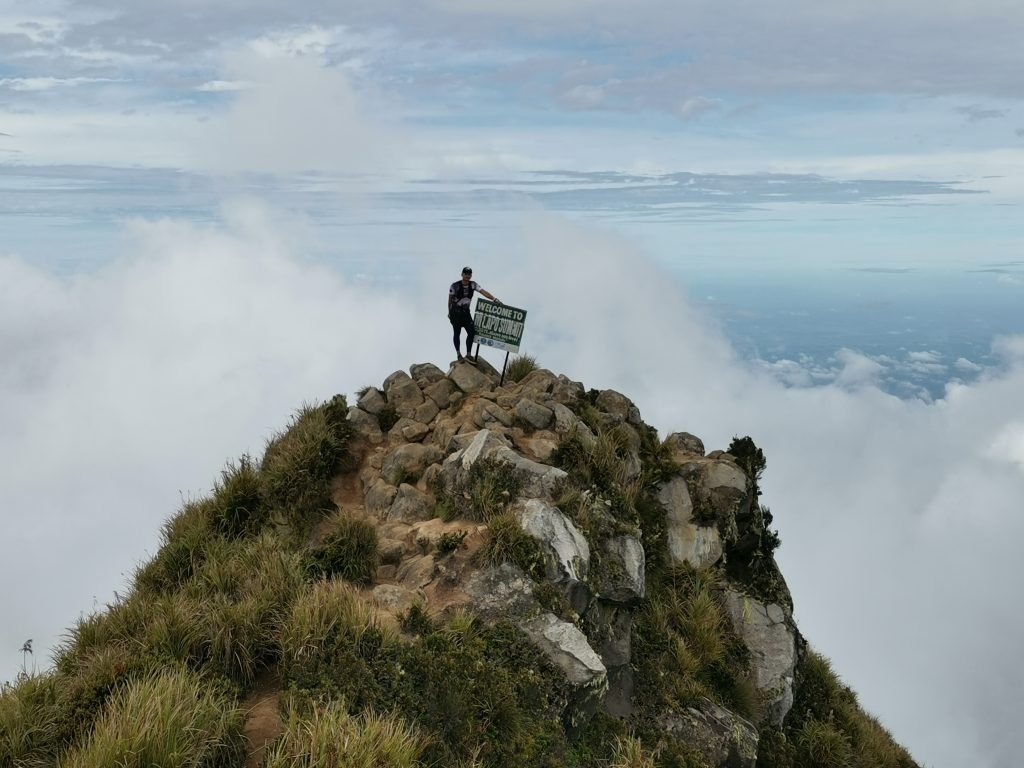
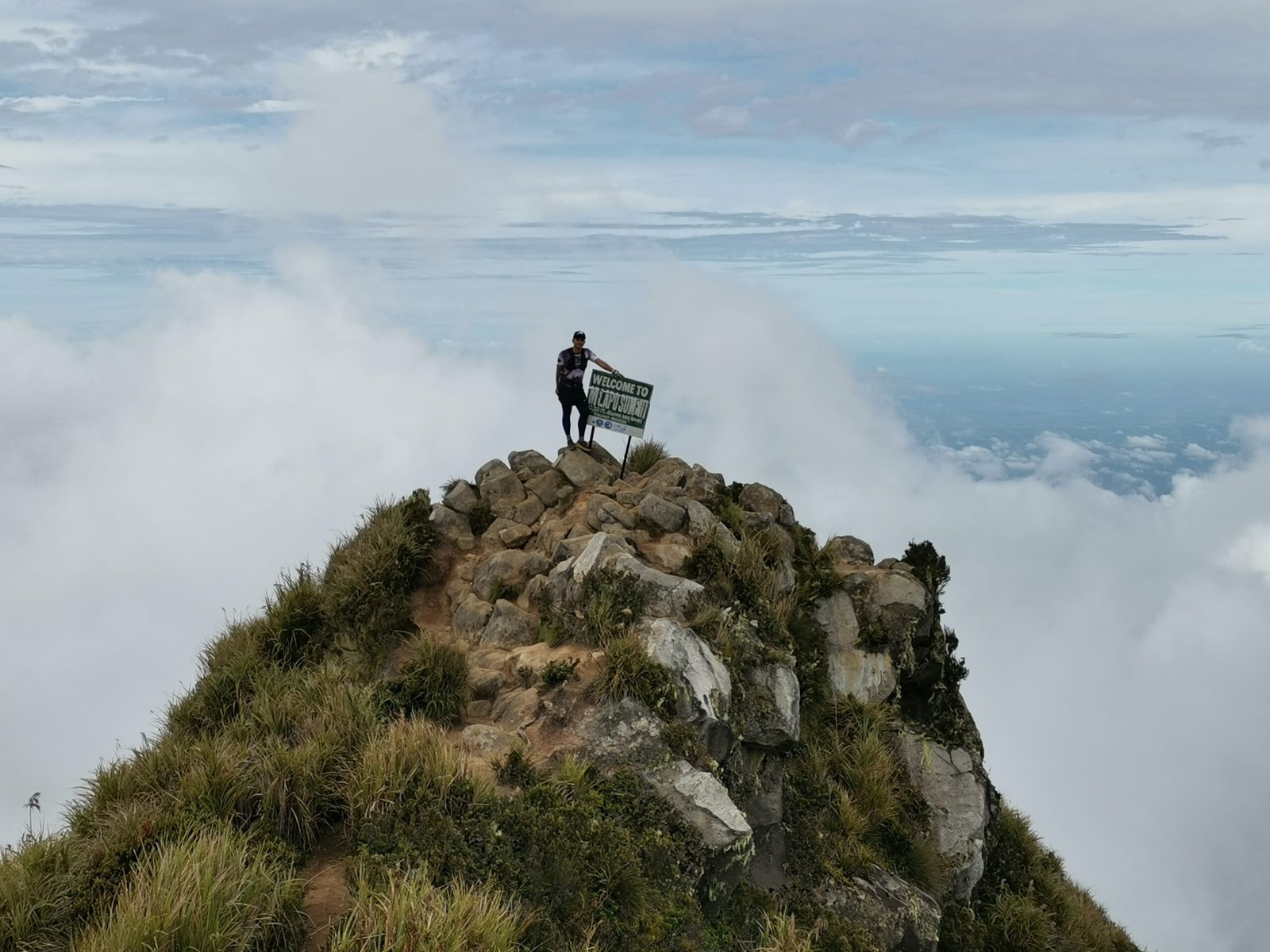
Standing at 2,956 meters (9,692 ft) above sea level, Mt. Apo is the highest point in the Philippines and the ultimate rite of passage for mountaineers. In 2026, climbing Mt. Apo is a highly regulated experience focused on conservation. With the implementation of the Unified Trekking Policy, hikers must now follow a standardized system for registration and fees across all entry points to ensure the mountain’s protection.
According to recent LGU updates on trekking policies, all climbers must coordinate with authorized tourism offices to ensure their climb is legal, safe, and environmentally sound.
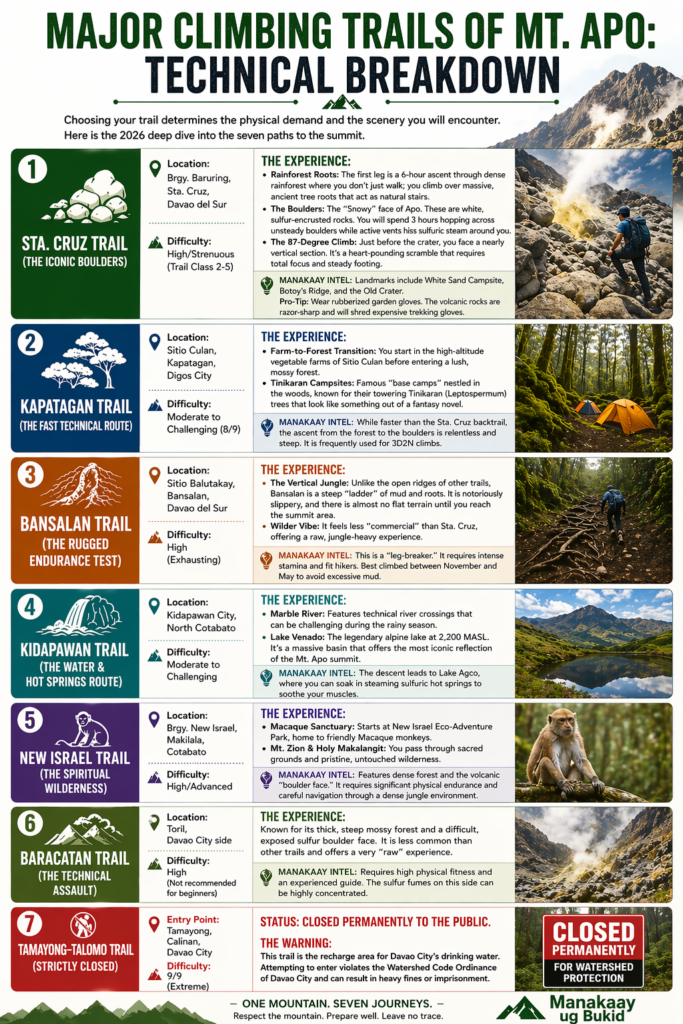
Major Climbing Trails of Mt. Apo: Technical Breakdown
Choosing your trail determines the physical demand and the scenery you will encounter. Here is the 2026 deep dive into the seven paths to the summit.
1. Sta. Cruz Trail (The Iconic Boulders)
The “poster child” of Mt. Apo. It is the most technical but also the most visually rewarding for those who want the classic volcanic experience.
- Location: Brgy. Baruring, Sta. Cruz, Davao del Sur.
- Difficulty: High/Strenuous (Trail Class 2-5).
- The Experience: * Rainforest Roots: The first leg is a 6-hour ascent through dense rainforest where you don’t just walk; you climb over massive, ancient tree roots that act as natural stairs.
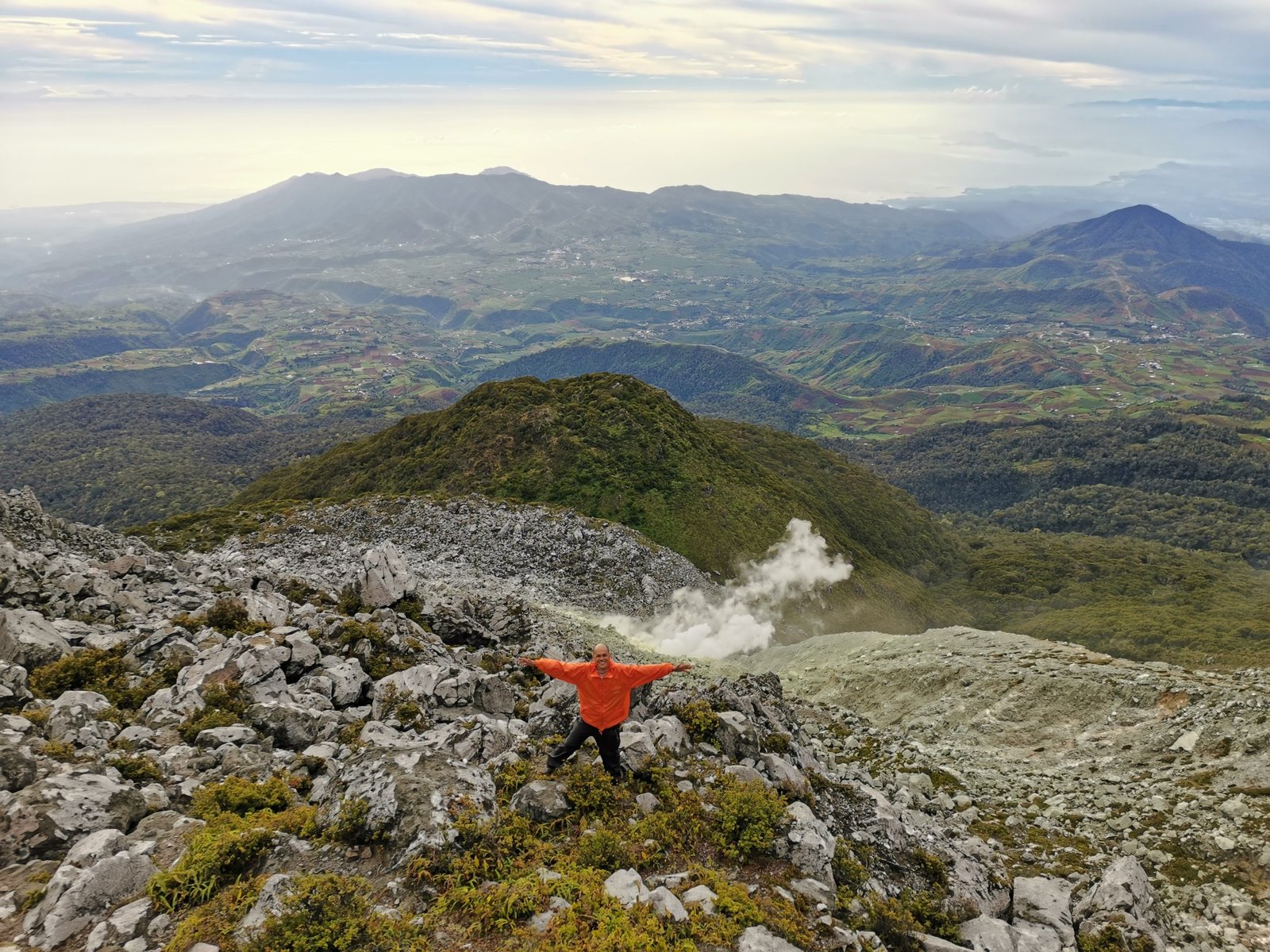
- The Boulders: The “Snowy” face of Apo. These are white, sulfur-encrusted rocks. You will spend 3 hours hopping across unsteady boulders while active vents hiss sulfuric steam around you.
- The 87-Degree Climb: Just before the crater, you face a nearly vertical section. It’s a heart-pounding scramble that requires total focus and steady footing.
- Manakaay Intel: Landmarks include White Sand Campsite, Botoy’s Ridge, and the Old Crater. Pro-Tip: Wear rubberized garden gloves. The volcanic rocks are razor-sharp and will shred expensive trekking gloves.
2. Kapatagan Trail (The Fast Technical Route)
Often combined with Sta. Cruz for a “Traverse,” this route is prized for its efficiency.
- Location: Sitio Culan, Kapatagan, Digos City.
- Difficulty: Moderate to Challenging (8/9).
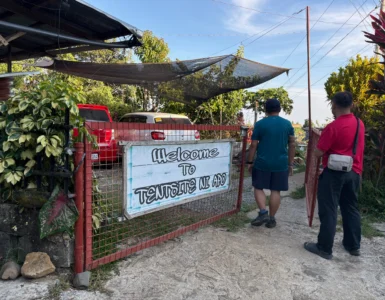
- The Experience: * Farm-to-Forest Transition: You start in the high-altitude vegetable farms of Sitio Culan before entering a lush mossy forest.
- Tinikaran Campsites: Famous “base camps” nestled in the woods, known for their towering Tinikaran (Leptospermum) trees that look like something out of a fantasy novel.
- Manakaay Intel: While faster than the Sta. Cruz backtrail, the ascent from the forest to the boulders is relentless and steep. It is frequently used for 3D2N climbs.
3. Bansalan Trail (The Rugged Endurance Test)
Don’t let the shorter distance fool you. Bansalan is famously known as the most physically exhausting entry point.
- Location: Sitio Balutakay, Bansalan, Davao del Sur.
- Difficulty: High (Exhausting).
- The Experience: * The Vertical Jungle: Unlike the open ridges of other trails, Bansalan is a steep “ladder” of mud and roots. It is notoriously slippery, and there is almost no flat terrain until you reach the summit area.
- Wilder Vibe: It feels less “commercial” than Sta. Cruz, offering a raw, jungle-heavy experience.
- Manakaay Intel: This is a “leg-breaker.” It requires intense stamina and fit hikers. Best climbed between November and May to avoid excessive mud.
4. Kidapawan Trail (The Water & Hot Springs Route)
This is the “scenic traverse” choice, usually used as an exit point for those who want a relaxing finish.
- Location: Kidapawan City, North Cotabato.
- Difficulty: Moderate to Challenging.
- The Experience: * Marble River: Features technical river crossings that can be challenging during the rainy season.
- Lake Venado: The legendary alpine lake at 2,200 MASL. It’s a massive basin that offers the most iconic reflection of the Mt. Apo summit.
- Manakaay Intel: The descent leads to Lake Agco, where you can soak in steaming sulfuric hot springs to soothe your muscles.
5. New Israel Trail (The Spiritual Wilderness)
Located in Makilala, this is a 3–5 day expedition for those who want a deep-dive into the mountain’s ecology and culture.
- Location: Brgy. New Israel, Makilala, Cotabato.
- Difficulty: High/Advanced.
- The Experience: * Macaque Sanctuary: Starts at New Israel Eco-Adventure Park, home to friendly Macaque monkeys.
- Mt. Zion & Holy Makalangit: You pass through sacred grounds and pristine, untouched wilderness.
- Manakaay Intel: Features dense forest and the volcanic “boulder face.” It requires significant physical endurance and careful navigation through a dense jungle environment.
6. Baracatan Trail (The Technical Assault)
- Location: Toril, Davao City side.
- Difficulty: High (Not recommended for beginners).
- The Experience: Known for its thick, steep mossy forest and a difficult, exposed sulfur boulder face. It is less common than other trails and offers a very “raw” experience.
- Manakaay Intel: Requires high physical fitness and an experienced guide. The sulfur fumes on this side can be highly concentrated.
7. Tamayong-Talomo Trail (Strictly Closed)
- Entry Point: Tamayong, Calinan, Davao City.
- Difficulty: 9/9 (Extreme).
- Status: CLOSED PERMANENTLY to the public.
- The Warning: This trail is the recharge area for Davao City’s drinking water. Attempting to enter violates the Watershed Code Ordinance of Davao City and can result in heavy fines or imprisonment.
2026 Requirements & Logistics
- Unified Trekking Policy: This policy standardizes registration across all LGUs. You cannot simply show up; you must book 1–2 months in advance through an LGU-authorized organizer.
- Budget: For a group of 5, expect a budget of ₱8,000 to ₱12,000 per person. This covers unified permits, mandatory guides, porters, and transportation.
- Mandatory Ratios: 1 Guide is required for every 5 trekkers.
- Zero Waste: Strict “Pack it in, Pack it out” rules are in effect. Your trash will be weighed/checked upon descent.
Manakaay Expert Tips
- Sulfur Precaution: The “Boulders” are active volcanic vents especially on the Sta. Cruz, Kapatagan and Baracatan routes.
- Conditioning: Do not underestimate “The Grandfather.” Engage in intense cardiovascular training (trail running or stair climbing) at least 2 months before your climb.
- Footwear: Use high-traction, waterproof boots. Trails like Bansalan and New Israel are notoriously muddy and slippery.
- Respect the Sacred: Mt. Apo is ancestral land. Follow all cultural protocols provided by your guides when passing through indigenous areas.
Frequently Asked Questions (FAQ)
1. What is the Unified Trekking Policy? It is a 2026 regulation that synchronizes registration, trekking fees, and conservation policies across all entry points (Davao del Sur and Cotabato). It ensures that all hikers are registered in a central system and that trail carrying capacities are not exceeded.
2. Can a beginner climb Mt. Apo? Yes, but only with a 3D2N itinerary and prior physical conditioning. We recommend doing 2–3 “minor” climbs first to understand how your body reacts to high elevation.
3. Is there a signal at the summit? Signal is spotty. Most campsites are total dead zones. Disconnect and enjoy the silence of the highlands.
4. What should I wear for the Boulder Face? The rocks are sharp and the fumes are strong. Use sturdy, high-traction boots and carry a buff or N95 mask to protect your lungs from sulfuric fumes when needed.
5. How do I book a climb? You must coordinate with the respective City or Municipal Tourism Offices (Sta. Cruz, Digos, Bansalan, Kidapawan, or Makilala) or book through an LGU-accredited mountain guide. We can also reserve a book for you.









 Dxtrometorphan