
 Dexter Priete
Embarking on a multi-day trek is an incredible way to connect with nature, but the joy can be overshadowed by the waste we often inadvertently leave behind. From single-use plastic packaging to discarded food wrappers, traditional hiking habits can have a significant environmental impact. But what if you could experience the wild and leave no trace – or even better, a zero-waste one?
This guide is for the conscious adventurer, the one who dreams of pristine trails and untouched wilderness. We’ll show you how to pack for a 3-day trek with absolutely no plastic, ensuring your adventure is as green as the forests you explore. Get ready to transform your hiking experience!
Why Go Zero-Waste on the Trail?
The statistics are sobering: millions of tons of plastic enter our oceans annually, harming wildlife and ecosystems. Even in remote wilderness areas, microplastics are found in soil and water. As hikers, we have a unique responsibility to protect the very environments we cherish. Going zero-waste isn’t just a trend; it’s a powerful statement and a practical step towards preserving our planet for future generations.
It challenges us to rethink our consumption, embrace durability, and lighten our load – literally and figuratively. Plus, many zero-waste alternatives are often more durable, healthier, and ultimately more cost-effective in the long run.
The Zero-Waste Mindset: Preparation is Key
Achieving a plastic-free trek starts long before you hit the trail. It requires thoughtful planning, conscious purchasing, and a willingness to embrace reusables.
1. Inventory Your Gear: Start by assessing your current hiking gear. What items are already plastic-free or can be easily swapped? Don’t feel pressured to buy everything new; aim to replace items as they wear out or when a genuinely better zero-waste alternative becomes necessary.
2. Meal Planning for Minimal Waste: Food is often the biggest culprit for plastic waste on a hike. Detailed meal planning is crucial. Think about:
- Dehydrated Meals: Make your own or buy from bulk bins in reusable containers.
- Whole Foods: Fruits, vegetables, nuts, and seeds can often be packed without packaging.
- Reusable Containers: Ditch ziplock bags for silicone pouches, stainless steel tins, or waxed canvas bags.
3. Research & Resources: Look for local bulk stores, farmers’ markets, and zero-waste shops. Online communities can also offer invaluable tips and product recommendations.
Essential Zero-Waste Packing List for a 3-Day Trek
Here’s a breakdown of what to pack, focusing on plastic-free alternatives for every category:
Food & Hydration
This is where you can make the most significant impact.
- Water Bottles/Bladders: Stainless steel bottles or a durable, BPA-free hydration bladder (already owned and maintained).
- Food Storage:
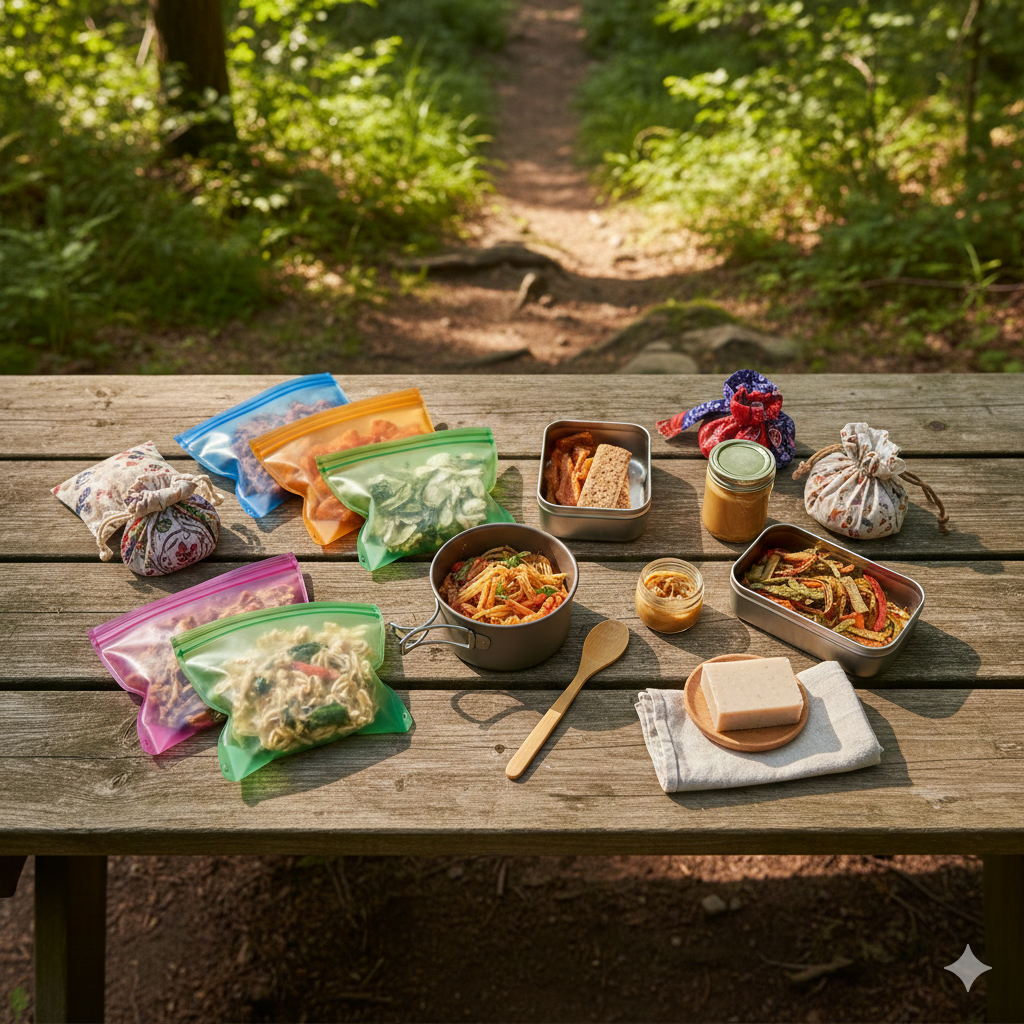
- Silicone Reusable Bags: Excellent for snacks, sandwiches, or even holding gear.
- Stainless Steel Containers: Lightweight options for more delicate foods or meal components.
- Waxed Canvas Bags: Great for dried goods, nuts, or bread.
- Cloth Produce Bags: Handy for carrying fresh fruits or veggies to the trailhead.
- Cooking:
- Titanium or Stainless Steel Cook Pot: Lightweight and durable.
- Wooden Utensils: A spork or a set of bamboo cutlery.
- Cloth Napkins/Bandanas: Double as cleaning cloths or hot pads.
- Reusable Coffee/Tea Filter: For your morning brew.
- Bulk Food Items: Oats, rice, pasta, dried fruits, nuts, and spices bought in your own containers.
- Reusable Tea Bags/Loose Leaf Tea: Or coffee grounds in a jar.
- Solid Dish Soap Bar: With a small scrub brush for cleaning.
- Small, Reusable Oil/Seasoning Dispensers: For cooking essentials.
- Stasher bags are another excellent choice for food storage due to their durability and reusability.
Here’s an example of a well-packed zero-waste meal setup for your trek.
Personal Care & Hygiene
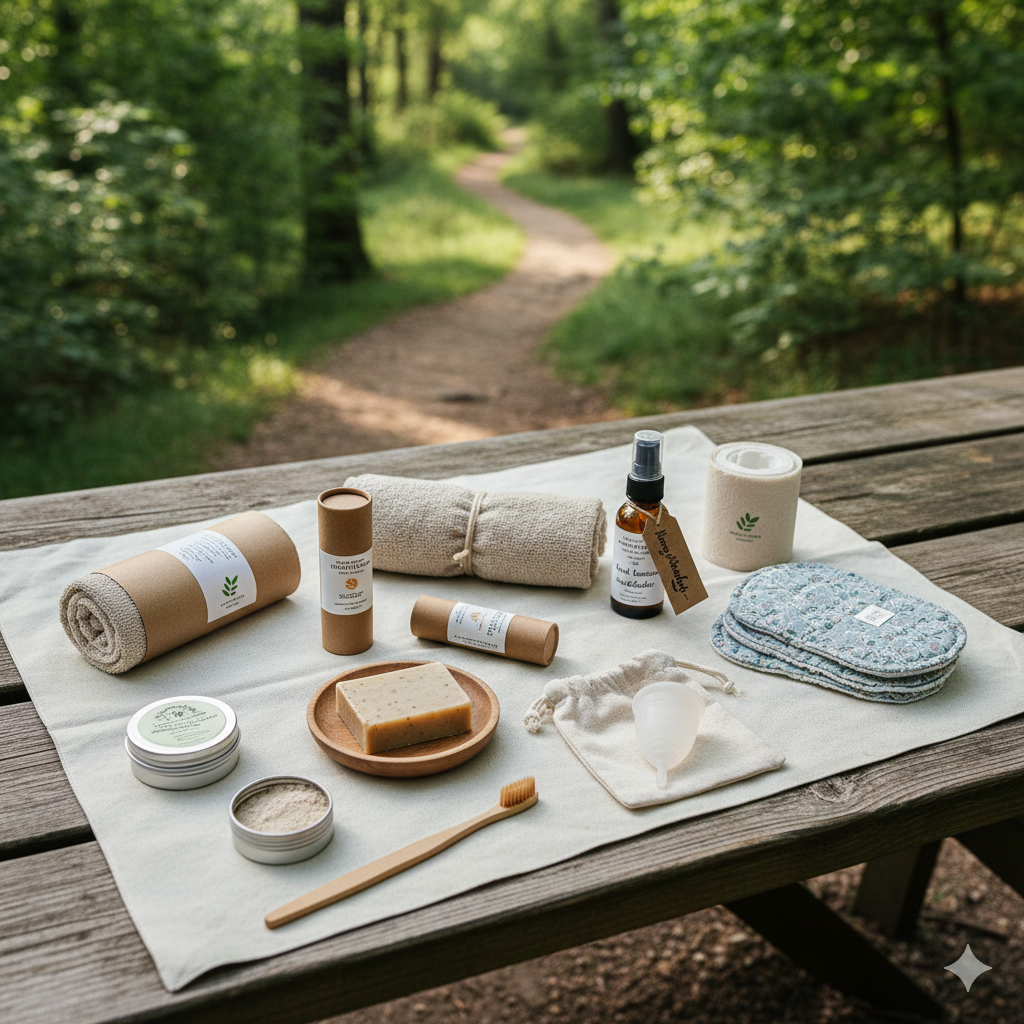
Minimize your toiletries and opt for solid, plastic-free versions.
- Soap Bar: Multi-purpose for body, hair, and even dishes.
- Toothbrush: Bamboo with a small tin of tooth powder or toothpaste bits.
- Sunscreen/Bug Repellent: In tins, cardboard tubes, or homemade in a reusable container.
- Menstrual Products: Reusable options like a menstrual cup or cloth pads.
- Small Towel: Quick-drying microfiber (if already owned) or a natural fiber cloth.
- Hand Sanitizer: A small reusable spray bottle filled from a bulk source, or an alcohol-based wipe made from compostable materials.
- Compostable toilet paper.
A neat display of zero-waste personal care items, all ready for your backpack.
Gear & Clothing
While challenging to be entirely plastic-free here, focus on durability, natural fibers, and mindful choices.
- Backpack: Choose durable materials, preferably second-hand or from brands committed to sustainability.
- Sleeping Bag/Pad: Look for synthetic-free options or use what you already have until it needs replacing.
- Tent: Durable, repairable tents are key.
- Clothing: Prioritize wool, organic cotton, hemp, and linen. Layering is crucial. Avoid buying new synthetic gear unless absolutely necessary.
- Navigation: Map and compass (no batteries, no plastic waste!) instead of relying solely on electronics.
- Headlamp/Flashlight: Reusable batteries are a must.
- First-Aid Kit: Stock it with plastic-free alternatives where possible (e.g., paper tape, bandages with minimal plastic, solid antiseptic).
- Repair Kit: Needle, thread, safety pins, duct tape (used sparingly for repairs).
Miscellaneous
- Trash Bag: A small cloth bag or a durable silicone bag to pack out all your waste, including food scraps.
- Fire Starter: Matches or a ferro rod.
- Notebook & Pen/Pencil: For journaling or notes.
- Multi-tool: Durable and long-lasting.
On the Trail: Practicing “Leave No Trace” with a Zero-Waste Twist
Your commitment doesn’t end with packing. While hiking, remember these principles:
- Pack It In, Pack It Out: This is the golden rule of Leave No Trace. Everything you bring in, you must take out – and this includes food scraps like orange peels and apple cores, which can take years to decompose and attract wildlife.
- Minimize Footprint: Stick to established trails to prevent erosion and protect delicate ecosystems.
- Respect Wildlife: Observe from a distance. Never feed animals.
- Dispose of Waste Properly: This means carrying out all your trash, including human waste where applicable (digging catholes 6-8 inches deep and 200 feet from water sources, trails, and campsites).
- Be Considerate of Other Visitors: Preserve the tranquility of nature.
Why Every Step Towards Zero-Waste Counts
It’s easy to feel overwhelmed by the idea of a completely plastic-free life, especially in the outdoors. Remember, the goal isn’t perfection, but progress. Every reusable item you choose, every piece of plastic you avoid, makes a difference.
By embracing the zero-waste hiking ethos, you’re not just protecting the trails you love; you’re becoming an advocate for a healthier planet. You’re demonstrating that adventure and environmental responsibility can, and should, go hand in hand. So, gear up, plan smart, and hit the trail with a lighter pack and a clear conscience.
Frequently Asked Questions (FAQ)
Q1: Is it really possible to hike for 3 days completely without plastic? A1: Yes, with careful planning and some intentional swaps, it is absolutely possible! It requires preparation, finding plastic-free alternatives for food, personal care, and being mindful of your gear choices.
Q2: What are the best alternatives to plastic Ziploc bags for food on the trail? A2: Excellent alternatives include silicone reusable bags (like Stasher bags), waxed canvas bags, small stainless steel containers, and even small cloth drawstring bags for dry goods.
Q3: How do I handle human waste in a zero-waste way? A3: The “Leave No Trace” principle for human waste still applies: dig a cathole 6-8 inches deep and at least 200 feet away from water, trails, and campsites. Use compostable toilet paper (and pack it out in a designated waste bag), or consider a bidet bottle.
Q4: What about items like headlamps or first-aid kits that inherently contain plastic? A4: Focus on durability and longevity. Use what you have until it breaks, then seek out repair options or the most sustainable replacement possible. For batteries, always use rechargeable ones. For first-aid, prioritize plastic-free alternatives where available (e.g., paper tape, natural fiber bandages) and ensure essential items are present, regardless of their material. The goal is to minimize, not necessarily eliminate every single trace of plastic overnight.
Q5: Where can I find zero-waste hiking gear and food supplies? A5: Look for bulk food stores, farmers’ markets, and dedicated zero-waste shops for food items. For gear, prioritize durable, second-hand items, or research brands that use recycled materials, natural fibers, and have strong sustainability commitments. Online communities and eco-friendly outdoor retailers can also be great resources.